 TR
TR  EN
EN  AR
AR  RU
RU  ZH
ZH  DE
DE  FR
FR  ES
ES  HI
HI  FA
FA 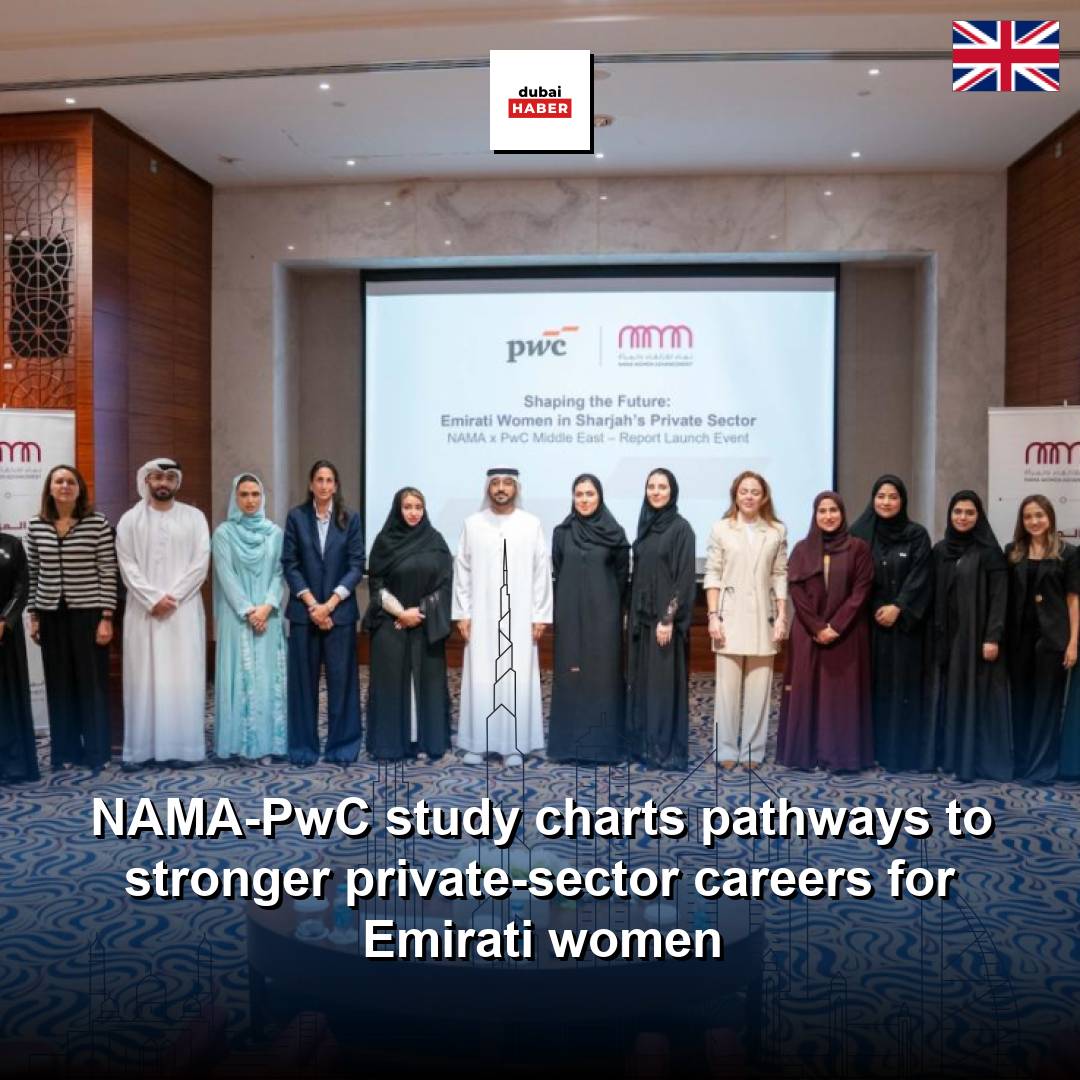
SHARJAH, 2nd September, 2026 (WAM) -- NAMA Women Advancement Establishment (NAMA), in collaboration with PwC Middle East, has launched a new report examining what enables Emirati women to build, sustain and advance their careers in Sharjah’s private sector, while identifying practical steps employers can take to strengthen the conditions for long-term retention, career progression and the overall workplace experience.Titled Understanding the Perspectives of Emirati Women of Sharjah on the Emirate’s Private Sector, the report draws on a survey of 691 Emirati women, supported by focus groups and discussions with policymakers, employers, HR leaders and government stakeholders. As Emirati women’s participation in the UAE private sector continues to grow, the research turns attention to the next dimension of that progress: ensuring that this growth translates into meaningful, sustained careers and greater opportunities to progress into leadership.The findings provide a detailed picture of the factors influencing women’s career decisions. 62% of respondents say they favour hybrid working arrangements, while working hours and compensation rank among the most important considerations when assessing private-sector opportunities, cited by 76% and 73% respectively.The research also found that 41% of respondents have been with their current organisation for between one and four years, while a further third have stayed for more than five years, reinforcing the opportunity for employers to build on this momentum by creating clearer routes to development, progression and long-term contribution.At the heart of the study is a shift in focus from access to advancement. NAMA and PwC developed the study to provide private-sector employers with a clearer evidence base on the experiences, expectations and ambitions shaping Emirati women’s career decisions in Sharjah. With women accounting for a sizeable percentage of Emiratis employed in the UAE private sector, their ability to build sustained and rewarding careers is increasingly important to the UAE’s wider workforce and economic ambitions.Mariam Al Hammadi, Director General of NAMA Women Advancement, said: “The progress achieved by Emirati women across our national workforce gives us an exceptionally strong foundation. The question before us now is how we build on that foundation. Increasing participation is important, but the next measure of progress must be whether women have the opportunities to develop, advance and lead throughout their careers. This research gives us direct insight into what Emirati women value and where employers can make the greatest difference in enabling them to sustain and advance their careers.”She continued: “Evidence is most valuable when it changes what we do. These findings give employers a practical basis for action, from clearer pathways for progression and meaningful professional development to greater flexibility and support across different stages of women’s lives. When Emirati women are able to sustain their ambitions and realise their potential over the course of a career, the impact extends beyond the individual. It strengthens organisations, develops national talent and contributes to a more competitive and future-ready economy.”Khaled Bin Braik, UAE Country Senior Partner and Emiratisation Leader, PwC Middle East, said: Employers have an important role to play in translating successful Emiratisation into long-term career outcomes. Our research in partnership with Nama Women Advancement shows that Emirati women are ambitious, highly skilled and eager to contribute. Organisations that consider the total workplace experience, including progression opportunities, flexibility, learning and family support will be best positioned to attract, retain and develop the next generation of Emirati leaders.The study identifies seven priority areas for employer action. These include ensuring Emirati talent is placed in meaningful roles, creating transparent career and compensation structures, expanding flexibility where roles allow, supporting women through key family and life stages, establishing structured career development and mentorship, strengthening leadership accountability, and introducing innovative long-term retention incentives.Career progression, skills development, flexibility, family support, cultural understanding and compensation form part of a wider career proposition that shapes whether women can see not only an opportunity to join an organisation, but a clear path to develop and progress within it.The study forms part of NAMA’s wider approach to turning research into practical private-sector engagement. Through initiatives including Irtiqa, NAMA works with employers to strengthen workplace practices and foster institutional environments that recognise women’s ambitions, respond to different career and life stages, and create greater opportunities for progression and leadership across sectors.
(Kaynak: WAM.ae)