 TR
 EN
 AR
 RU
 ZH
 DE
 FR
 ES
 HI
 FA
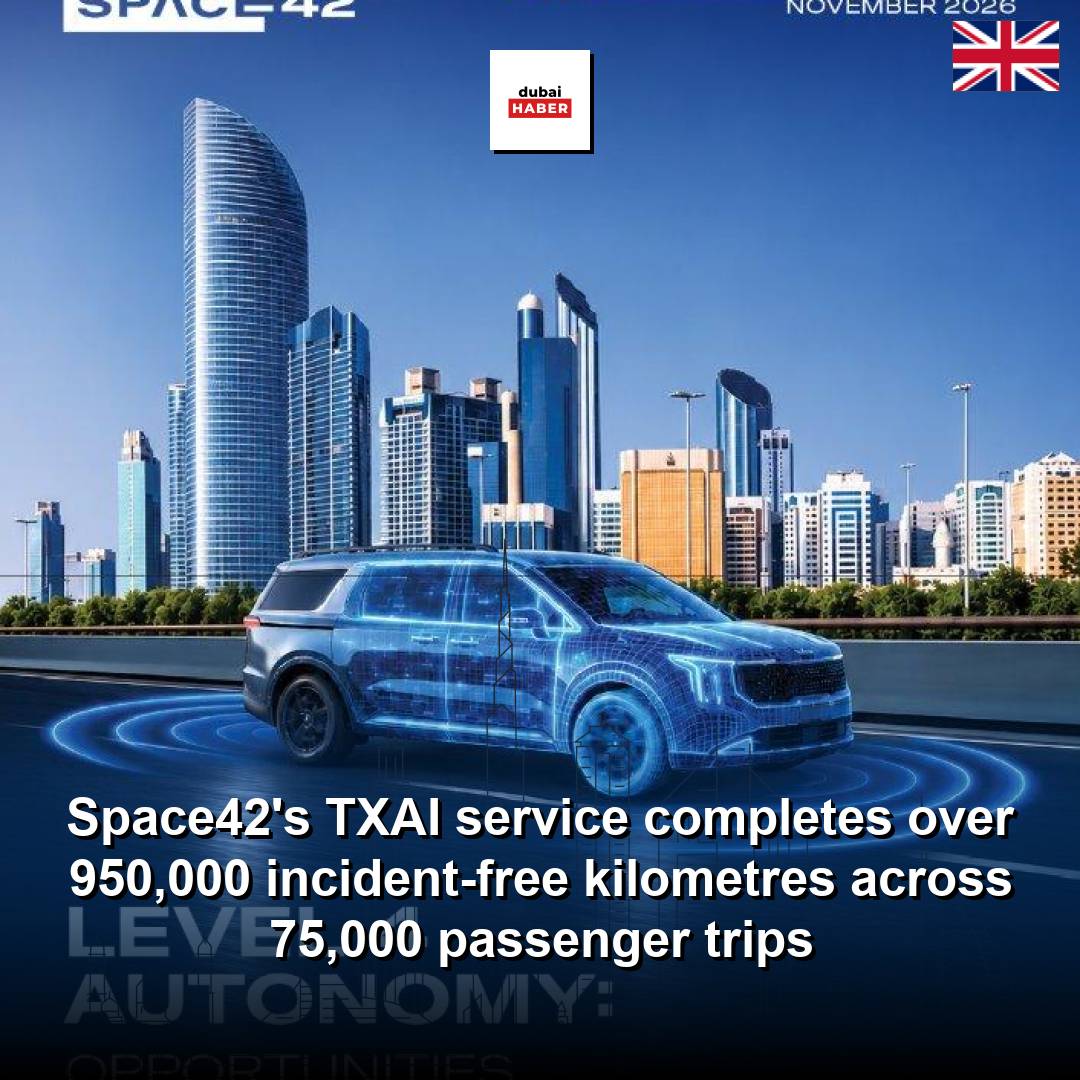
ABU DHABI, 26th November, 2026 (WAM) -- Space42 (ADX: SPACE42), the UAE-based AI-powered SpaceTech company, has published Level 4 Autonomy: Opportunities and Challenges, an analysis of innovation across driverless mobility and the priorities that will determine safe and viable scale.
Autonomous mobility supports urban commercial transportation, and its widespread adoption depends on the integration layer that runs the system behind the vehicles. As of May 2026, 23 cities, including Abu Dhabi and Dubai, offer commercial robotaxi services, up from 10 in 2024. Advancing the global integration of Level 4 autonomy (L4) into mobility frameworks requires a validated automated driving system, a defined Operational Design Domain (ODD), supporting connectivity infrastructure, clear routes to regulatory authorisation and sustainable unit economics. The Viewpoint highlights how Abu Dhabi deliberately incorporates this layer into its long-term vision for transportation.
Advances in AI, geospatial mapping, satellite connectivity, machine learning and sensors, along with the pursuit of safer roads, are accelerating L4 adoption worldwide. Cities across China, the United States, Japan, the United Kingdom, Singapore and several European nations have adopted L4 or are in the process of doing so.
Public confidence, however, will determine how quickly L4 autonomy moves into everyday use. Expanding coverage therefore requires evidence that systems can handle dynamic road conditions safely through effective fleet management and operational oversight. As the public engages more with autonomous ride-hailing solutions, and as business and industrial fleet operators explore the economic benefits, momentum is set to grow.
A steady, phased rollout guided by clear targets and close government oversight has positioned Abu Dhabi as an active L4 deployment market. The emirate aims for autonomous transport to account for 25% of all public trips by 2040. Space42's TXAI service on Yas Island, Saadiyat Island and at Abu Dhabi Airport, launched in November 2021, marked the start of the journey. As of October 2026, TXAI had completed over 950,000 incident-free kilometres across 75,000 passenger trips, gathering practical experience to inform future deployments. Today, the emirate has a registered fleet of 69 autonomous vehicles providing transport across communities.
The Smart and Autonomous Systems Council (SASC), Abu Dhabi Mobility (formerly the Integrated Transport Centre) and the Smart and Autonomous Vehicles Industry (SAVI) Cluster provide governance frameworks, with the aim of achieving fully remote operations with no in-vehicle human oversight.
To build the technology and digital infrastructure backbone that enables advanced commercial L4, Space42 offers geospatial intelligence, HD mapping, AI and data infrastructure to the sector. NEXO, Space42's joint venture with South Korea's Autonomous A2Z, opens a practical pathway to scale through vehicle integration and retrofitting. Space42 is also developing the UAE's first Sovereign Mobility Cloud in collaboration with Core42 and Microsoft, designed to host mobility data and autonomous systems securely within the UAE, while working closely with an ecosystem of partners to shape integrated mobility solutions.
The next stage of autonomous mobility adoption calls for coordinated action across all stakeholders. The Viewpoint identifies three priorities: establishing verifiable safety and operational performance, improving the economics of routine service delivery, and reducing the effort required to replicate an approved deployment in new locations.
Policymakers, regulators, fleet operators and investors can read the full Level 4 Autonomy: Opportunities and Challenges Viewpoint to understand how an integrated ground layer turns autonomous mobility ambitions into commercially viable services.
(Source: WAM.ae)