TR
TR  EN
EN  AR
AR  RU
RU  ZH
ZH  DE
DE  FR
FR  ES
ES  HI
HI  FA
FA
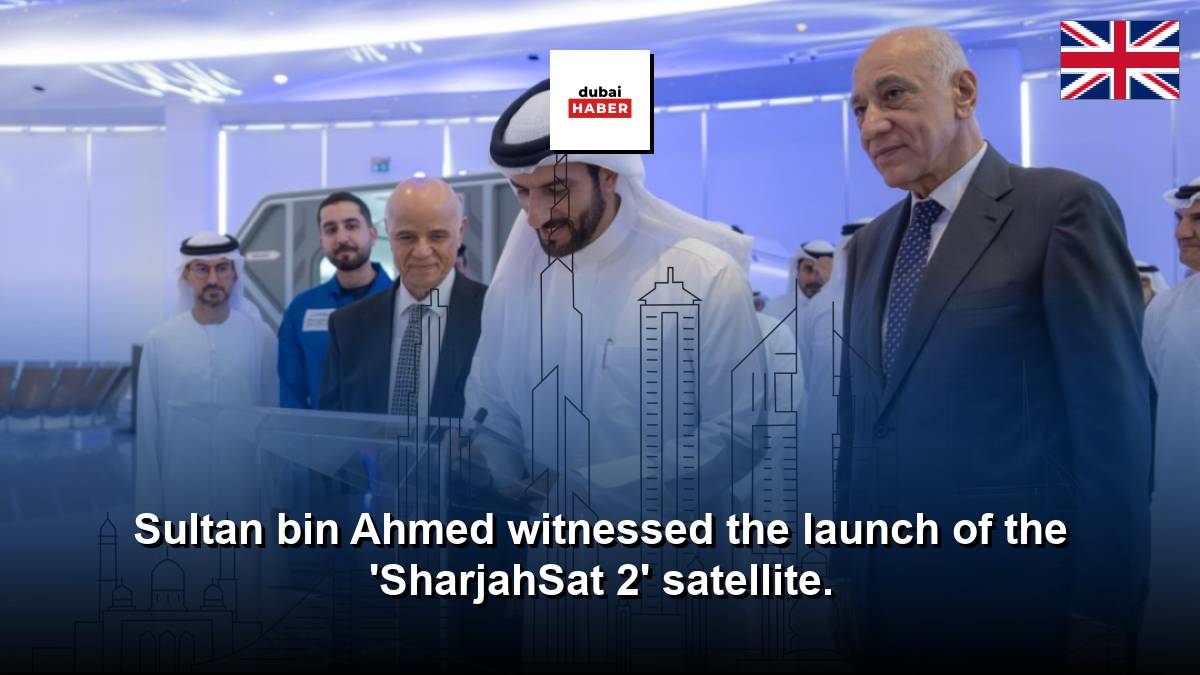
SHARJAH, March 30, 2026 (WAM) -- H.H. Sheikh Sultan bin Ahmed bin Sultan Al Qasimi, the Second Ruler of Sharjah and President of the University of Sharjah (UOS), on Monday evening watched the launch of the "SharjahSat 2" CubeSat via live broadcast from Vandenberg Air Force Base in California, USA, aboard a "Falcon 9" rocket belonging to SpaceX. H.H. Sheikh Sultan bin Ahmed extended his congratulations to President H.H. Sheikh Mohamed bin Zayed Al Nahyan, H.H. Sheikh Dr. Sultan bin Mohammed Al Qasimi, Member of the Sharjah Supreme Council and Ruler of Sharjah, and the people of the United Arab Emirates on the successful launch of "SharjahSat 2." He emphasized that the launch represents a new milestone in the emirate's journey to strengthen its position in the fields of space science and advanced technology. This project supports scientific research and enables young national talents to effectively contribute to shaping the future. He announced that "SharjahSat 2" is the second project in a series of CubeSats developed by Emirati engineers at the Sharjah Space and Astronomy Centre. This confirms the continuity of the scientific and technical approach adopted by the emirate and enhances the capabilities of students and researchers in satellite design and operation. As a result, this project aims to keep pace with global developments in the space sector by preparing a generation equipped with tools for innovation and knowledge. He highlighted that this success is a result of the collaborative efforts of academic and research institutions across the country. This reflects the UAE's commitment to strengthening its presence in the space sector at both regional and international levels. He emphasized that the next phase will include innovative projects that promote sustainable development and provide more opportunities for youth to contribute to national progress. Professor Hamid Majoul Al Nuaimi, who advises the President of the University of Sharjah and is the Director of the Sharjah Space and Astronomy Centre, confirmed that the "SharjahSat 2" satellite is part of a series of satellites developed within an integrated scientific program by the centre. This program aims to provide students and researchers with comprehensive practical experience in satellite design, development, operation, and analysis. Such efforts contribute to ensuring that the outputs of this program serve vital institutions in the Emirate of Sharjah and enhance the role of national talents in the space sector. Al Nuaimi explained that this project is the result of years of continuous scientific and engineering efforts conducted by a team of researchers and engineers working in collaboration with various government institutions in the emirate. This reflects a model of integration between scientific institutions and supporting organizations. The satellite will provide high-quality data and images that can be used in various fields, including environmental studies, urban planning, monitoring surface changes, and supporting scientific research in space sciences. Engineer Amal Al Hammadi described the features and advanced technical specifications of the "SharjahSat 2" CubeSat and highlighted its journey into space, noting that the satellite will be launched into a low Earth orbit approximately 500 kilometers above the Earth's surface. This position allows the satellite to effectively carry out its missions in scientific research, Earth observation, and the development of modern space technologies. Following the successful launch, Al Hammadi announced that a pilot phase lasting approximately three months will be tested to ensure the efficiency of the satellite's systems. This phase will be followed by an operational phase in which responsible parties will engage to capture periodic images of the Emirate of Sharjah and the United Arab Emirates and analyze them. H.H. Sultan bin Ahmed watched the launch of the "Falcon 9" rocket carrying the "SharjahSat 2" CubeSat alongside members of the university's Board of Trustees, institutional leaders, senior officials, and participants. He listened to an explanation about the stages from the rocket's launch, its separation, and the satellite's entry into orbit. After the successful launch of the "SharjahSat 2" CubeSat, H.H. signed a simulated satellite plaque and congratulated the Emirati engineering team that contributed to the project's success by shaking hands with them. He also thanked the government institutions that supported the project, namely: Sharjah Electricity, Water and Gas Authority, Planning and Survey Department, and Sharjah Municipality, wishing them success in future projects. It was noted that the "SharjahSat 2" hybrid satellite aims to provide high-resolution spectral images and data, offering participating organizations the necessary information to enhance their research and practical activities. This will support their future strategic plans and improve the strategic planning of projects in the Emirate of Sharjah. The SharjahSat 2 CubeSat project consists of five subsystems that follow the structure used in CubeSats. The energy system meets the satellite's energy needs using solar panels and batteries for energy storage; the communication system enables communication with the satellite and data reception; the control and guidance system ensures precise balance and navigation; the data processing system is responsible for managing and analyzing information; and the external structure provides protection and support to other systems. The project aims to provide high-quality scientific data and images to partners in various fields, particularly urban planning, monitoring urban growth and changes, environmental studies, land degradation, desertification, and tracking anthropogenic transformations; it also supports risk management through the continuous observation of relevant developments.
Sultan bin Ahmed witnessed the launch of the 'SharjahSat 2' satellite.
ATK.AI
30.03.2026 21:55