 TR
 EN
 AR
 RU
 ZH
 DE
 FR
 ES
 HI
 FA
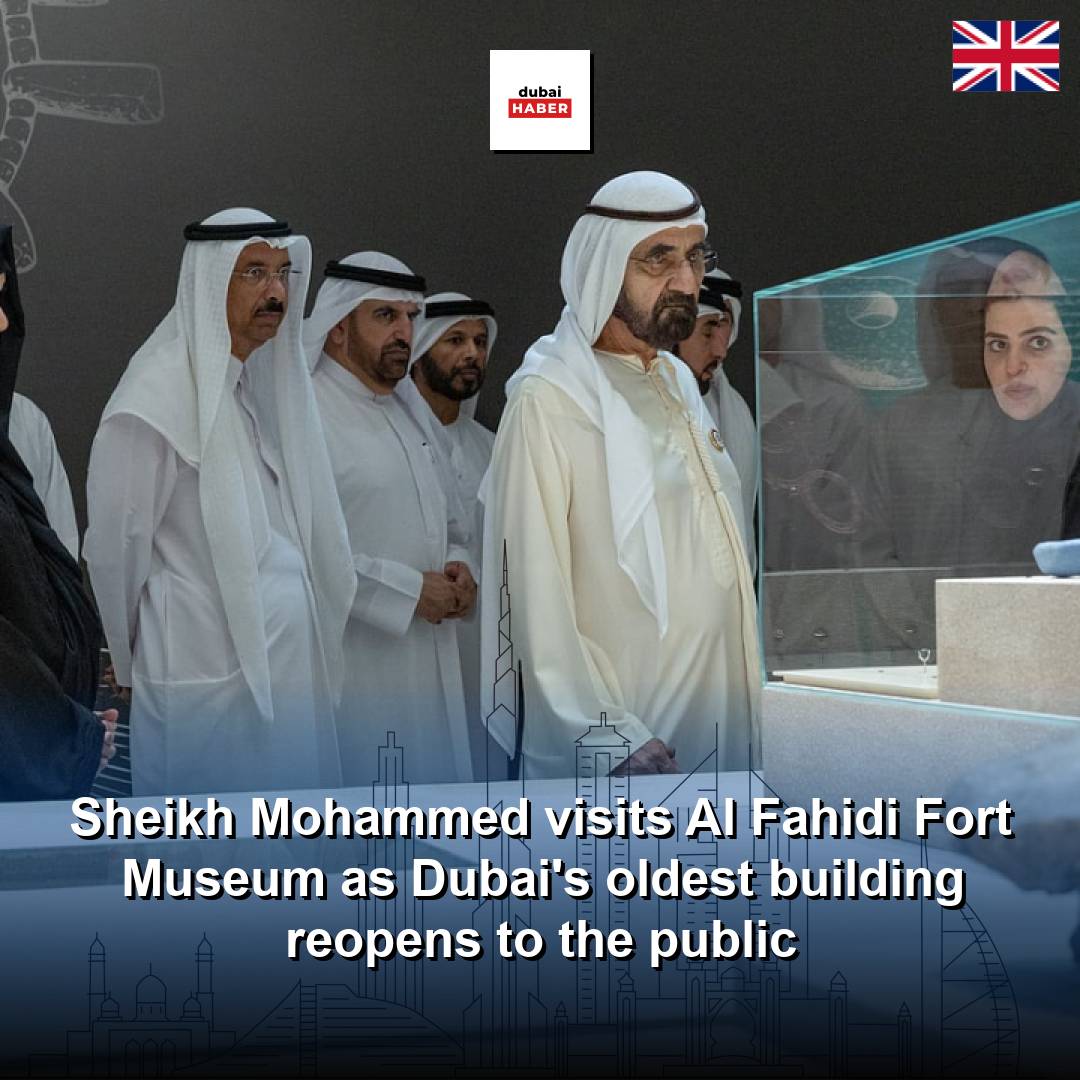
Dubai Ruler Sheikh Mohammed bin Rashid Al Maktoum visited Al Fahidi Fort Museum, Dubai's oldest standing historic building.
Following its comprehensive restoration and redevelopment, the landmark offers an interactive museum experience that combines historical artefacts with immersive displays. The museum traces Dubai's origins and stages of development, inviting visitors from around the world to explore the emirate's history and defining milestones.
For more than 230 years, the Fort stood as a formidable stronghold and protector of Dubai, witnessing its beginnings and transformations. It played a pivotal role in defending the city and served as its seat of government. Today, it stands as a cultural landmark that preserves the emirate's memory and chronicles the milestones of its journey, from its origins along Dubai Creek to its emergence as a global city.
Sheikh Mohammed said: "Our museums are cultural beacons that preserve our memory and tell the story of a people who held firmly to their values and built their nation with determination and resolve. Today, we reopen the doors of Al Fahidi Fort so it can remain a living landmark that tells the story of Dubai and its people. We want our children to know where we began, and the world to discover our culture and history, from which we draw strength to continue building and shaping the future".
Sheikh Mohammed bin Rashid Al Maktoum toured the Fort, exploring its galleries, exhibitions and collections, including documents and archival materials, interactive digital media and audiovisual experiences tracing the Fort's history, evolving roles and transformations from its construction in 1787 to the present day.
He also visited The Vault, an immersive museum experience that traces the development of defence in Dubai and the UAE, as well as Sheikh Mohammed's contribution to its evolution. The gallery features pieces of his military uniform, communications equipment and military musical instruments, alongside weapons and equipment used in Dubai and the UAE across different periods. Together, these objects document key stages in the development of the country's defence capabilities.
The Dubai Ruler, who also serves as the Vice-President and Prime Minister of UAE, stressed that preserving the nation's history and safeguarding its cultural heritage is a national responsibility that reflects pride in its roots and a commitment to ensuring that its stories and values remain deeply embedded in the hearts and minds of future generations.
"Al Fahidi Fort connects generations to Dubai's history through a museum and cultural experience that highlights the civilisational and human values that shaped our society. It offers our children an opportunity to discover the foundations upon which the emirate was built and the lessons and experiences of its past," he added.
Located at the heart of historic Dubai, Al Fahidi Fort is an important source of knowledge and a key landmark documenting the development of life in the emirate. Its functions evolved alongside the city, serving as the seat of government until 1896, an administrative centre supporting community needs, and a storehouse for the city's supplies and possessions.
In 1971, the Fort entered a new chapter when it opened as Dubai's first museum under the directives of the late Sheikh Rashid bin Saeed Al Maktoum. Al Fahidi Fort Museum features six main galleries that tell the story of the Fort and its history. The museum houses more than 700 heritage and historical items, encompassing tangible and intangible cultural heritage, oral heritage, archaeological artefacts, and Islamic arms and armour.
'The Vault' presents an immersive audiovisual experience that uses light and sound technologies to highlight key milestones in the military career of Sheikh Mohammed and trace the evolution of Dubai's defence capabilities.
The partners in the Al Fahidi Fort Museum restoration project include the Ministry of Defence, Dubai's Roads and Transport Authority (RTA), Dubai Municipality, and the Dubai Department of Economy and Tourism (DET).
(Source: Khaleej Times)