 TR
 EN
 AR
 RU
 ZH
 DE
 FR
 ES
 HI
 FA
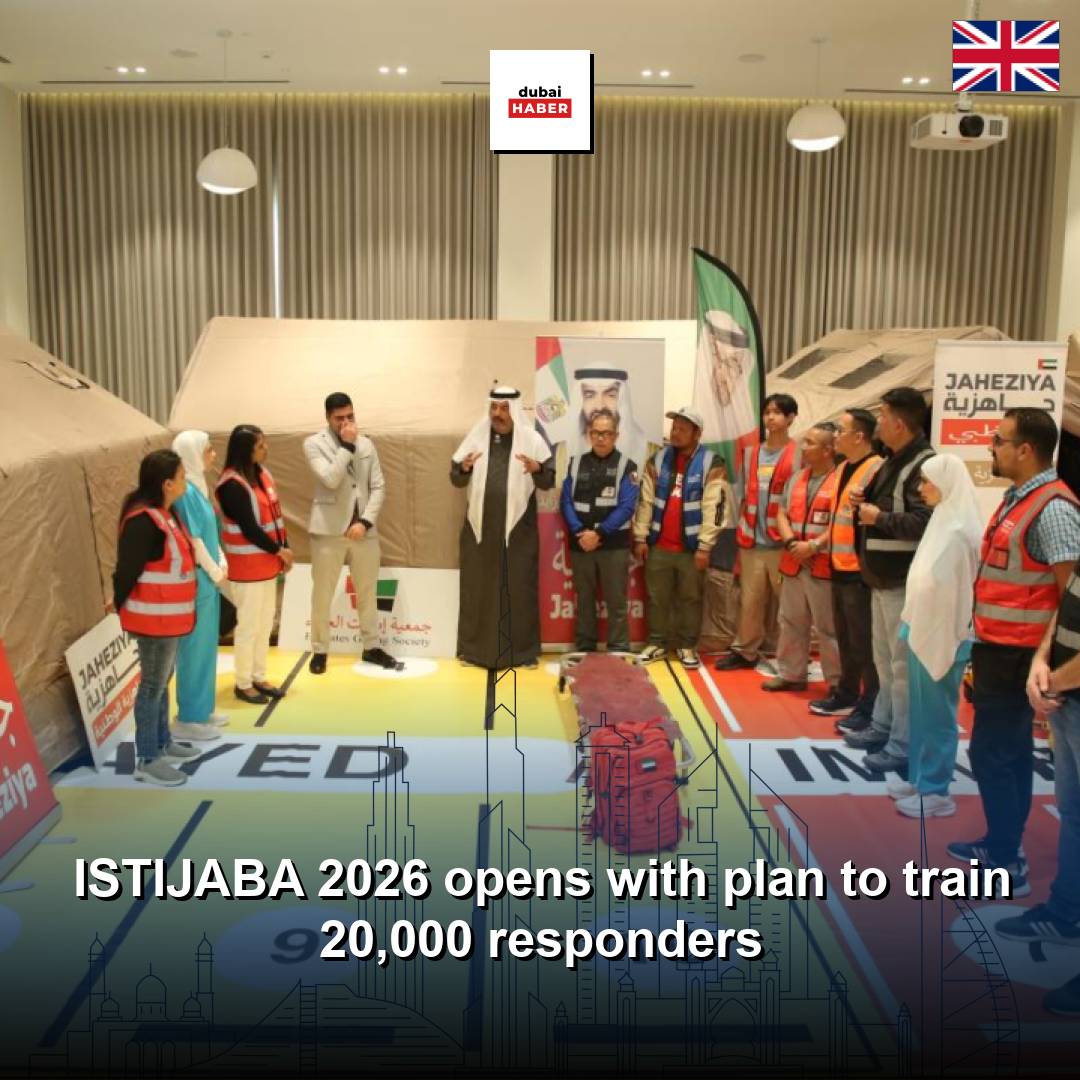
ABU DHABI, 29th November, 2026 (WAM) -- The UAE National Medical Readiness and Response Programme (JAHEZIYA) announced a strategic plan to train 20,000 frontline personnel and community and specialised emergency medical responders over the next ten years, after successfully training 10,000 emergency medical responders working in civilian and military institutions.
The announcement came at the opening of the UAE National Community and Specialised Emergency Medical Response Teams Conference, ISTIJABA 2026, at Nabdh Al Manhal Community Hub in Mohammed bin Zayed City, Abu Dhabi. Held under the theme "National Readiness, Integrated Response, Sustainable Giving", the conference brought together medical leaders and national and international experts.
The plan aims to develop national competencies and measure field performance through 10 training pathways. These cover community, institutional and hospital readiness, first responder and medical reserve training, major incident and disaster management, chemical, biological, radiological, nuclear and explosive (CBRNE) preparedness, tactical medicine, cardiopulmonary resuscitation, instructor and leadership development, and capacity development for mobile clinics and field hospitals.
Dr. Adel Abdullah Al Shamry Al Ajami, Chief Executive Officer of the Zayed Giving Initiative, President of the Emirates Doctors Initiative and Chief Executive Officer of JAHEZIYA, said the plan follows a scientific methodology based on international standards. It brings together medical, emergency medical services, security and community sectors and links their work with field hospitals. He said the next phase would focus on preparing instructors and field leaders, activating reserve and volunteer medical teams, and expanding local and international partnerships.
Professor Roberto Mugavero, President of the European Centre for Disaster Medicine, commended the UAE model for combining academic training, medical simulation and field practice. He said the centre's strategic partnership with JAHEZIYA seeks to facilitate knowledge exchange, prepare leaders and develop joint training programmes across the Middle East and North Africa.
Professor Olivier Jakdine, Director of the Advisory Board of the Middle East and North Africa Centre for Disaster Medicine, said the first minutes in managing critical conditions and cardiac emergencies are crucial to survival. He stressed the importance of integrating the roles of first responders, community members and hospitals, and using technology and medical simulation to link prehospital care with care delivered within healthcare institutions.
Dr. Noura Al Ajami, Director of the UAE Emergency Medical Response Teams, said the programme recruits medical, nursing, emergency medical services, technical and administrative personnel, as well as volunteers, and trains them through specialised pathways for medical and humanitarian missions. The teams are supported by ten mobile clinics and seven mobile field hospitals, enabling them to respond to medical needs within the UAE and abroad.
The conference featured lectures, workshops, tabletop exercises and field simulations covering command and control, mass casualty management, medical triage, evacuation, tactical emergency casualty care, civilian and military CBRNE preparedness, resource management, communication and assessment of response effectiveness.
The Emirates Giving Association and the National Medical Response Programme (ISTIJABA), part of JAHEZIYA, organised the conference. It was an initiative of the Zayed Giving Initiative, the Emirates Doctors Initiative and the UAE National Medical Reserve, in strategic partnership with the European Centre for Disaster Medicine, the Middle East and North Africa Centre for Disaster Medicine, National Training (TADREEB) and Medics Conferences, and in coordination with the Department of Culture and Tourism - Abu Dhabi.
(Source: WAM.ae)